top of page

Uterine Fibroid Embolization (UFE) in Nairobi | Non-Surgical Fibroid Treatment in Kenya
Fibroid Treatment Options in Kenya


Women with fibroids generally have four main treatment options. The right choice depends on symptoms, age, fertility wishes, and overall health.
1. Watchful Waiting
Watchful waiting is suitable for women nearing menopause or those with mild symptoms. Fibroids often shrink naturally as hormone levels decline, so monitoring may be sufficient.
2. Medical Therapy
Medical therapy focuses on controlling symptoms, especially heavy menstrual bleeding.
Hormonal medications help regulate bleeding.
Other medications improve the blood’s clotting ability.
Medical therapy does not treat the fibroids themselves—it only reduces the symptoms they cause.
3. Surgery
Surgery has traditionally been the gold standard for fibroid treatment. The two surgical options are:
Myomectomy: Removal of the fibroids while preserving the uterus.
Hysterectomy: Removal of the uterus and fibroids, eliminating the chance of recurrence.
4. Minimally Invasive Treatment – Uterine Fibroid Embolization (UFE)
UFE is a safe, effective, minimally invasive alternative to surgery. It has been performed globally since 1995, and at Aga Khan University Hospital Nairobi since 2009.
Studies conducted worldwide and at Aga Khan University Hospital Nairobi show:
90% patient satisfaction after fibroid embolization
90% effectiveness in reducing heavy menstrual bleeding, the most common symptom
If you are experiencing symptoms caused by fibroids, you can get in touch for a detailed evaluation. I work closely with the Gynecology Department at Aga Khan University Hospital Nairobi to help determine the most appropriate and personalized treatment option for you.


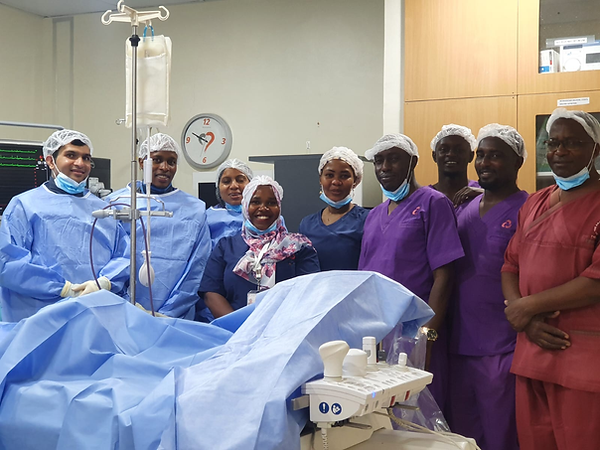
Dr. Naushad Karim carried out the first uterine artery embolization at Aga Khan Hospital Mombasa in November 2022

Frequently Asked Questions

Do I need to see a gynecologist before having a Uterine Fibroid Embolization (UFE)?
No, you don’t need to see a gynecologist before being referred for Uterine Fibroid Embolization. Our team works closely with gynecologists to evaluate whether UFE is the right option for you. If we find that UFE may not be the best treatment, we can refer you to a trusted gynecologist we work with, or you’re welcome to see one of your choice.
What are fibroids?
Uterine fibroids are non-cancerous growths in or around the uterus. They can vary in size and location, including the uterine wall, surface, or cavity. Up to 70-80% of women over 50 may have fibroids, though many experience no symptoms. When symptoms occur, they can include heavy bleeding, pelvic pain, frequent urination, and pain during intercourse. While fibroids are generally harmless, they can cause discomfort and complications like anemia. Treatment options include medications, minimally invasive procedures like Uterine Fibroid Embolization (UFE), or surgery.
What is Adenomyosis
Adenomyosis is a condition where endometrial tissue grows into the muscular wall of the uterus. This causes symptoms such as heavy, painful periods, severe cramping, pelvic pain, and sometimes an enlarged uterus. Treatment options include pain management, hormonal therapies, and minimally invasive procedures like Uterine Fibroid Embolization (UFE). In some cases, a hysterectomy may be necessary.
What are the treatment options for fibroids?
Treatment for fibroids depends on their size, location, and symptoms. Common options include:
-
Watchful Waiting: For women near menopause, as fibroids often shrink naturally after this time.
-
Medical Treatments: Medications like tranexamic acid to reduce bleeding and hormonal therapies to manage symptoms.
-
Surgical Treatments: Options include fibroid removal (myomectomy) or, in more severe cases, a hysterectomy (removal of the uterus).
-
Minimally Invasive Treatments: Uterine Fibroid Embolization (UFE) is a non-surgical procedure that cuts off blood flow to the fibroids, causing them to shrink.
What are the treatment options for Adenomyosis?
The gold standard for treating adenomyosis is hysterectomy (removal of the uterus). However, Uterine Fibroid Embolization (UFE) offers a non-surgical option with a 70% success rate in reducing symptoms.
What symptoms does Uterine Fibroid Embolization treat?
Uterine Fibroid Embolization (UFE) is highly effective in reducing heavy periods, with a success rate of over 90%. While UFE is very successful at alleviating menstrual symptoms, it may take 3-6 months for noticeable improvement in size-related symptoms.
Around 30% reduction in fibroid volume is typical within the first few months. Over time, as the body absorbs the dead fibroids, they continue to shrink gradually.
What is the success rate of Uterine Fibroid Embolization?
Uterine Fibroid Embolization (UFE) is a highly effective, minimally invasive treatment for fibroids. It is particularly successful in relieving symptoms such as heavy menstrual bleeding, pelvic pain, and bulk-related symptoms.
-
Symptom Relief: Studies show that 80-90% of women experience significant improvement in symptoms following UFE
-
Fibroid Shrinkage: UFE typically results in 30-60% reduction in fibroid size by 3-6 months.
-
Patient Satisfaction: 80-90% of women report being satisfied with the results of the procedure.
How many UFEs has Dr. Naushad Karim carried out?
Dr. Naushad Karim has been involved in carrying out UFEs from 2017. He has been involved in more than 500 UFEs in Kenya, Uganda, Canada and Australia.
What to Bring for Your Uterine Fibroid Embolization Consultation
To help us evaluate your case, please bring the following:
-
Previous medical reports and scans (if available).
-
If you don’t have any scans, don’t worry—we will arrange an MRI before considering you for the procedure.
-
Recent blood tests, particularly those showing your blood levels (important if you are undergoing treatment for anemia).
What to Expect on the Day of Your Uterine Fibroid Embolization Procedure
On the day of your procedure, here’s what you can expect:
-
Fasting: You’ll need to fast (no food or drink) after midnight the night before the procedure.
-
Check-In & Admission: Once you arrive, you’ll be checked in and an anesthetist will meet with you to place an IV line.
-
Procedure Review & Consent: We will go over the procedure details once more and have you sign a consent form.
-
Anesthesia: The anesthetist will administer conscious sedation (similar to the feeling of a stiff drink)—it will help you relax and may make you fall asleep.
-
Procedure Start: Once you’re comfortable, we will begin the procedure
How is Uterine Fibroid Embolization (UFE) Carried Out?
Uterine Fibroid Embolization is typically performed using the following steps:
-
Access Point: A small 2mm hole is made in your left wrist (in rare cases, we may use your groin).
-
Catheter Insertion: A catheter (long tube) and wire are inserted to locate the arteries supplying the uterus.
-
Embolization: Tiny particles are injected into the arteries to block blood flow to the fibroids, causing them to shrink.
-
Post-Procedure: The catheter and wire are removed, and a band is applied to the wrist. You will be able to sit up, use the washroom, and eat and drink once you are fully awake
What Material is Used to Block the Blood Supply to the Fibroids?
During Uterine Artery Embolization, we use either Poly Vinyl Alcohol (PVA) particles or Embospheres (a synthetic polymer cross-linked with gelatin). These materials are biocompatible, meaning they are well-tolerated by the body and have no known harmful effects
What Are the Potential Complications of Uterine Fibroid Embolization?
While Uterine Artery Embolization is generally safe, like any medical procedure, there are potential risks. These include:
-
Bleeding at the Access Site: This is rare and can be easily controlled, especially when the wrist is used as the access point.
-
Injury to Blood Vessels: Extremely rare, but could occur while navigating the blood vessels.
-
Non-Target Embolization: This happens if particles block other arteries in the pelvis. This is minimized by using X-ray dye to confirm the target artery before injecting particles.
-
Infection: Although fibroids may theoretically become infected after dying off, infections are extremely rare. We minimize this risk by administering an antibiotic during the procedure.
-
Premature Menopause or Impact on Fertility: While the ovaries have a separate blood supply, there are small branches from the uterine artery that may affect the ovaries. In young, healthy women, this is usually not an issue, but in women nearing menopause, UFE could potentially accelerate the onset of menopause.
-
Post-Embolization Syndrome: This common set of symptoms includes pain, cramping, nausea, vomiting, muscle and joint aches, and fever. It usually lasts 1-2 weeks and is managed with medication.
What to Expect After Uterine Fibroid Embolization
After your Uterine Artery Embolization (UAE) procedure, here’s what you can expect:
-
Hospital Stay: We typically recommend that you spend one night in the hospital to manage pain and monitor your recovery.
-
Post-Embolization Syndrome: You may experience symptoms such as pain, cramping, nausea, vomiting, muscle and joint aches, and fever. These symptoms usually last for 1-2 weeks and are managed with medication.
-
Discharge & Recovery: You will be discharged with medications to help manage symptoms, and a sick leave note for up to two weeks.
-
Follow-Up Appointment: A clinic visit is scheduled about 10 days post-procedure to monitor your recovery.
-
Vaginal Discharge: It is common to experience a vaginal discharge for up to a month as the body sheds dead fibroid tissue. This may include small clumps of tissue expelled through the birth canal until your periods resume
What is the Recovery Period for Uterine Fibroid Embolization?
The recovery period for Uterine Fibroid Embolization (UFE) typically lasts 1-2 weeks. During this time, we will provide you with medications to manage any symptoms at home. We will also give you a sick leave note to cover this period.
Can Uterine Fibroid Embolization Cause Infertility?
No, Uterine Fibroid Embolization (UFE) is considered a safe procedure for treating fibroids while preserving fertility. Studies have shown that pregnancy rates after UFE are similar to women without fibroids and women who undergo myomectomy for their fibroids.
How Soon After Uterine Fibroid Embolization is Pregnancy/Conception Advised?
We recommend waiting at least one year after Uterine Fibroid Embolization (UFE) before trying to conceive. This allows time for your uterus to fully recover and for fibroids to shrink, ensuring the best possible conditions for a healthy pregnancy.
Additional resources for Uterine Fibroid Embolization:
https://ask4ufe.com/all-about-fibroids/
https://beyondfibroids.africa/treatment/
Video resources explaining the UFE procedure:
https://youtu.be/fjGIDbLjxxo?si=tU4kNa8WmScrCADr
Patient reviews for Uterine Fibroid Embolization for Dr. Naushad Karim at Aga Khan University Hospital Nairobi:
dr. naushad karim interventional radiologist nairobi reviews https://share.google/rwgQYyy686FEgqJwq


Additional Resources
bottom of page